home
about IGPN -->
> News
News
February 24, 2026
The Irish Office of Government Procurement (OGP) sought to develop a framework contract for remanufactured notebook computers to advance sustainability through shared services, efficient resource use and standardisation. The contract aimed to build on the previous framework by ensuring access to high quality remanufactured Windows Notebook Computers at the most economically advantageous cost for all Framework Clients, promoting and encouraging SME participation, and supporting the environmental ambitions of the Irish Government.
To achieve this, the OGP developed a series of award criteria requiring suppliers to reduce waste, minimise the demand for raw materials, use less energy than manufacturing new products, support circular economy principles and ensure cost savings between 25% and 40%, as remanufactured computers should be much cheaper than equivalent new ones. After three attempts the framework contract was eventually awarded to a single supplier, an Irish SME in consortium with a UK based remanufacturer.
The first attempt included as a standalone lot on a Framework that also provided for new devices. Three bids were received on the lot, however only one was compliant so a multi-supplier framework could not be established. The second attempt failed due to an insufficient number of compliant bids being received to enable the establishment of a multi-supplier framework. The OGP believes the unsuccesful attempts can be contributed to lack of experience among suppliers of ICT products in bidding for public contracts, and too difficult specifications around services, warranty, device quality, scale, availability, and standards.
For more details on the development of the tender and the main lessons learnt, take a look at the in-depth case study featured in the GPP Helpdesk.
Learn more at ICLEI sustainable procurement platform webpage.
...continue to read
category : Topics
February 10, 2026
WACKER is one of the few producers outside China manufacturing high-purity polysilicon – a key material for solar cell production. The company can demonstrate that all its materials are responsibly sourced. At the same time, solar modules using cells made from WACKER’s polysilicon are only marginally more expensive than modules based on supply chains fully located in China.
The Big Buyers Working Together (BBWT) Community of Practice (CoP) on Sustainable Solar visited WACKER’s Burghausen site to gain insights into how risks such as forced labor in the global solar supply chain can be minimized and what cost implications this entails.
While it is technically impossible to link every batch of silicon metal to a specific batch of polysilicon, WACKER has full control and transparency of every material which enters its processes. This is ensured through strict supplier controls, Ecovadis-based requirements, and full disclosure of quartz sources. Furthermore, each pallet of polysilicon is traceable to the customer who received it, enabling module manufacturers and ultimately buyers to confirm that the polysilicon used in their modules comes from WACKER.
Suppliers of silicon metal must provide a formal self-declaration confirming the origin of quartz used in their production. This decla ration includes disclosure of the quartz source, confirmation of its origin, and responses to WACKER’s sustainability and compliance questionnaires. Only suppliers meeting these requirements, together with Ecovadis documentation, are approved. Since silicon metal is typically produced near quartz mines, sourcing outside China is essential for a sustainable and responsible supply chain.
WACKER’s sustainable approach results in only a minimal cost increase: approximately €0.022 per watt-peak, translating to less than €0.001 per kWh. The price difference between a regular module and one using WACKER’s polysilicon is therefore negligible, making it easier for public buyers to justify choosing ethical and sustainable solutions.
For Europe’s solar industry to grow, clear signals of demand for sustainable solar panels are needed – through public procurement requirements or subsidies. The CoP emphasizes that carbon footprint criteria alone are insufficient, as some manufacturers can report low-carbon values or offset emissions through certificates. Berlin’s experience with traceability criteria and supplier declarations could serve as best-practice examples for other public buyers.
Learn more at ICLEI Sustainable procurement platform webpage.
...continue to read
category : Topics
February 2, 2026
In 2025, Sustainable Public Procurement strengthened its role as a key lever for climate action and circularity, with governments increasingly using public purchasing power to drive market change. The 10YFP Secretariat (hosted at UNEP) advanced a shared global reference point for action on Sustainable Public Procurement, particularly in the built environment. This document highlights the main achievements and priorities that shaped progress over the last year.
Global initiative positions government purchasing power as a lever for climate action
Eight countries formally endorsed the Global Framework for Action on Sustainable Public Procurement (SPP) in the Built Environment, signaling a shared commitment to use public demand to accelerate decarbonisation, circularity, and resilience in construction and infrastructure.
Sustainable public procurement integrates environmental, social, and life-cycle criteria into how governments buy, from materials to digital and energy systems. Because public authorities are among the world’s largest buyers, procurement decisions shape markets. When governments require whole life-cycle assessments, circular materials, or climate-aligned standards, suppliers respond at scale.
Brazil, Colombia, Finland, France, Ghana, Japan, Kenya, and Somalia endorsed the Framework in 2025. A further five countries: Armenia, Germany, Italy, Luxembourg, and the United Kingdom, formally acknowledged its importance at the inaugural Ministerial Meeting of the Intergovernmental Council for Buildings and Climate (ICBC) at COP30. Together, these signals mark a shift from fragmented pilots toward a shared global reference point for action.
2025: From ambition to implementation
Progress this year was anchored across four mutually reinforcing fronts:
1. Political momentum
Our engagement extended across high-level policy forums and technical working groups. Fourteen convenings advanced the role of procurement as a climate and development lever, including the World Circular Economy Forum, the GlobalABC Annual Assembly, the 5th Global Conference on Sustainable Food Systems, the RICG Annual Conference, and the 4th International Conference on Financing for Development, among others. Notably, four Buildings Breakthrough Roundtables mobilised action under the Priority Action on Demand Creation through public procurement, placing buyers at the centre of systems change.
At COP30 in Belém, under Axis 6 (Enablers and Accelerators), UNEP, Brazil’s Ministry of Management and Innovation, the Jataí Institute, UNIDO IDDI, and OxGAP co-led the development and launch of the Plan to Accelerate Solutions on Harnessing public procurement in high-impact sectors to drive climate action and a just transition. UNEP also co-led five side events to elevate the agenda. This effort was accompanied by the Brazil-led Belém Declaration on Sustainable Public Procurement, outlining concrete measures to align procurement systems with the UN 2030 Agenda.
2. Technical progress
To support governments in moving from policy to practice, UNEP launched three cornerstone resources:
• The Global Framework for Action on SPP in the Built Environment, providing a structured pathway to embed circularity across the full procurement cycle;
• The Circularity and Whole Life-Cycle Case Study Platform, showcasing real-world applications aligned with the 10 Whole Life-Cycle Recommendations;
• The National Circularity Assessment Framework for Buildings, enabling governments to identify gaps, priorities, and entry points for improving circular material and waste flow in the buildings and construction sector.
These resources were complemented by three regional workshops and six global webinars, strengthening peer learning and south–south exchange. Visit our last webinar on best practices for implementation at local level: Use of sustainable public procurement to drive demand for a near-zero and resilient built environment.
UNEP also developed key resources and achieved important milestones under the EcoAdvance project, jointly implemented by GIZ and Öko Institut, and funded by the Federal Ministry for the Environment, Climate Action, Nature Conservation and Nuclear Safety (BMUKN). A series of good practices on the joint use of ecolabels and SPP was launched, with eight of them replicated by ecolabelling schemes and governments. Uzbekistan adopted a resolution introducing measures to strengthen the use of ecolabels in support of SPP, granting certified products an additional five per cent in their overall evaluation score when certified by a recognized ecolabel. Costa Rica's NDC 2025–2035 was launched, including commitments on SPP and ecolabelling in the building sector. Meanwhile, Thailand, Sri Lanka, the Philippines, and Uzbekistan developed ambitious climate- and biodiversity-related ecolabel criteria for cement and steel, and promoted policy dialogues to support the application of these criteria in SPP.
3. Global monitoring
As custodian of SDG Indicator 12.7.1, UNEP led the 2025 global reporting cycle on sustainable public procurement policies. Sixty-five countries reported, including 13 first-time participants such as Brazil, Australia, South Africa, and the Russian Federation. Fifty-four countries achieved compliant scores.
The data confirms a consistent trend: while policy frameworks are increasingly in place, implementation support for procurement officers, impact measurement, and market engagement remain uneven. The global average maturity score remained medium-low, confirming that legislative frameworks exist, but that practical implementation tools and impact measurement lag behind. These evidence-based insights will now directly inform the design of 2026 regional capacity-building programmes and our global advocacy efforts.
4. Strategic partnerships
Collaboration deepened with the Global Alliance for Buildings and Construction (GlobalABC), the Buildings Breakthrough community, and regional partners, as well as with UN agencies: UNOPS and UNIDO for the built environment, and FAO for food systems. In Latin America, UNEP is advancing a joint regional SPP strategy with eight countries: Chile, Colombia, Costa Rica, México, Panamá, Paraguay, Perú, and the República Dominicana. In Africa, a complementary regional approach is under development, with six countries: Senegal, Ghana, Kenya, Tunisia, Mauritius, and South Africa, co-designing a tailored capacity-building programme for implementation in 2026.
What’s next: 2026 priorities
The focus now shifts decisively to delivery:
1. Launch five online training modules on circular and sustainable procurement for buildings and construction, developed with IISD
2. Pilot regional SPP programmes in Africa and Latin America, enabling structured south–south cooperation, and scale buyer–supplier dialogues to translate policy signals into market response and accelerate supplier innovation
3. Expand endorsement and uptake of the Global Framework for Action on SPP in the built environment, and finalize and launch the Global Framework for Action on SPP to advance sustainable food systems
4. Deliver implementation milestones through COP30 PAS on SPP deployment and strategic engagement towards COP31
5. Enhance SDG 12.7.1 monitoring, transforming reporting data into actionable insights for decision-makers
Acknowledgements
This progress reflects the collective efforts of partners across the global sustainable procurement community, including UNOPS, UNIDO, and FAO; the co-leads and multistakeholder advisory committee members of the One Planet Network SPP Programme; the Ministry of the Environment of Finland; the Ministry of Infrastructure and Water Management of the Netherlands; Brazil’s Ministry of Management and Innovation; the European Commission's Directorate-General for Environment; Jataí Institute; the Global Alliance for Buildings and Construction and its Circular Built Environment Working Group; the Global Framework for Action Leadership Panel; the Buildings Breakthrough community; the 10YFP Board; and the growing network of governments, colleagues and procurement officers advancing this work on the ground.
Learn more at UNEP One Planet Network news center.
...continue to read
category : Topics
January 26, 2026
GPN Japan, released new service for retailers with “Eco-products Database”. This database lists approximately 13,000 products and services, providing detailed environmental information such as compliance with Act on Promoting Green Procurement, acquisition of environmental labels, and use of energy-saving and recycled materials, in addition to information that complies with the “Green Purchasing Guidelines”. (URL of the guidelines: https://www.gpn.jp/english/guideline/)
Products listed in “Eco-products Database” are indicated as “Products listed in Eco-products Database” on the websites and catalogs of eight office supply mail order companies, and are widely used as reference information for companies, local governments, consumers, and others when making green purchases. On the other hand, since “Eco-products Database” lists representative model numbers for series products that come in different colors and sizes, it was a burden for office supply mail order companies to confirm which model numbers were listed in “Eco-products Database” when indicating that a product was a “Eco-products Database” listing in their catalogs.
Therefore, company has decided to provide the JAN codes (Japanese 13-digit code identifying the product) for products listed by “Eco-products Database” listing providers to office supply mail-order businesses and other retailers. “Eco-products Database” updates its listing information four times a year (March, June, September, December), and we will begin providing JAN code information starting in March 2026.
Attention is increasingly focused on environmental information for products and services, such as carbon neutrality, the circular economy, and nature positivity. Changes in consumption behavior are being sought not only from organizational purchasers but also from individual consumers.
By providing the JAN codes for products listed on “Eco-products Database,” we aim to facilitate verification by retailers, increase consumer exposure to products listed on “Eco-products Database,” and promote green purchasing. We will continue to collect environmental information on products and strive to expand the green market by disseminating useful information to organizational purchasers and individual consumers.
“Eco-products Database” URL: https://www.gpn.jp/econet/
...continue to read
category : Topics
January 19, 2026
The Global Circularity Protocol for Business (GCP) Version 1.0 is a voluntary, science-based framework designed to help companies measure, manage, and communicate their circularity performance. Developed jointly by WBCSD and the One Planet Network (hosted by UNEP) with input from more than 150 experts and over 80 organizations, it provides standardized metrics and practical guidance for reducing waste, cutting emissions, and improving resource efficiency across value chains. Piloted by leading companies, the GCP enables credible, comparable reporting and supports businesses in identifying circularity hotspots, enhancing accountability, and strengthening resilience. Announced at COP30, it marks a significant step toward harmonized global practices for circularity.
More details at One Planet Network knowledge center.
...continue to read
category : Topics
January 12, 2026
We are pleased to announce the release of the Chinese translation of Communicating Chemicals in Products: Global guidance on providing voluntary chemical-related sustainability information for products. The translation was supported by the China Environmental Certification Center (CEC) and Shenzhen Zero Waste.
Products of modern life—from clothing and cosmetics to electronics, furniture, packaging, toys, and even the materials used in our homes—contain a wide range of chemicals. With an estimated 40,000–60,000 industrial chemicals present on the global market, improving how information on these substances is communicated has become more important than ever.
This publication offers practical guidance for better sharing information on chemicals and material ingredients as part of broader product sustainability communication. Building on the 10 high-level principles of the Guidelines for Providing Product Sustainability Information, the document explains how these principles can be applied specifically to chemicals in products. It also includes best-practice examples to support businesses and organizations in delivering clear, reliable, and accessible information.
As a complementary resource to the original Guidelines, this translated edition aims to support Chinese-speaking stakeholders in enhancing transparency, strengthening consumer trust, and improving the communication of chemical-related sustainability information across all product categories.
Learn more at One Planet Network news center.
...continue to read
category : Topics
January 5, 2026
COP30 closed with a clear message: sustainable public procurement is now central to global climate and circular-economy action. Across the negotiations, governments highlighted procurement as a practical lever to transform markets, spur innovation and deliver resilient infrastructure.
Under Axis 4 on cities, infrastructure and water, delegates advanced Objective 12 on sustainable and resilient buildings. The Buildings Breakthrough—coordinated by UNEP and the GlobalABC—reported progress on a package of global deliverables, from shared definitions and procurement guidance to finance solutions and capacity-building tools. Together, these aim to support countries in scaling near-zero emission and resilient buildings.
A major milestone within this package was the Global Framework for Action on Sustainable Public Procurement. Advanced through an endorsement campaign led by UNEP’s 10YFP, the framework gained eight new country endorsements and five formal acknowledgments, receiving strong recognition during the first Ministerial Meeting of the Intergovernmental Council for Buildings and Climate.
Momentum continued under Axis 6 on enablers and accelerators, where COP30 spotlighted the Plan to Accelerate Solutions (PAS) on Public Procurement. Led jointly by UNEP 10YFP and partners in Brazil, UNIDO IDDI and OxGAP, the PAS positions procurement as a key instrument for integrating climate considerations across government decision-making.
Axis 6 also saw the launch of the Belém Declaration on Sustainable Public Procurement, which outlines concrete steps to align major supply chains with the 2030 Agenda. With procurement accounting for 15–30% of national GDP, the declaration—already signed by Brazil and the Netherlands—is expected to draw additional supporters in the months ahead.
Discover more of the Outcomes of COP30 in the event outcomes document.
...continue to read
category : Topics
December 18, 2025
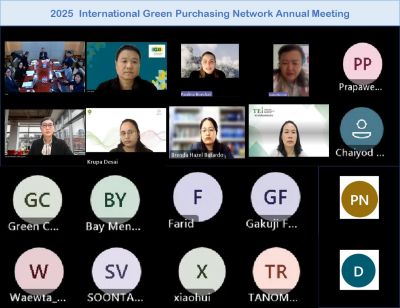
2025 annual meeting of the International Green Purchasing Network-IGPN was held on the theme of environment friendly products/services low carbon of integrated management and green purchasing practice virtually on December 11. Participants from national Green Purchasing Networks (GPN), and IGPN Advisory Board, invited experts from UNEP, GEN, ICLEI-Local Governments for Sustainability attended this meeting. The meeting was hosted by the IGPN Secretariat, China Environmental United Certification Center–CEC.
Mr. Chen Yanping, Chair of IGPN, presented his speech in the opening remarks, “Public procurement has been increasingly positioned as one of the most powerful levers for tackle climate change. 2025, the IGPN in collaboration with UNEP One Planet Network, launched the supply chain management innovative practice collection activity which achieved periodical progress. I hope participants exchange fully for the achievements and expectations, plan for next year development by considering the global trends”. Mr. ZHU Shu, regional director of ICLEI East Asia vice chair of IGPN, delivered his welcome remarks, strategically align IGPN’s work with major global agendas, hope actively build synergies between sustainable procurement with the critical discussions on planet biodiversity and the sustainable development.
Meanwhile, Ms. Paulina Boéchat, Representative of UNEP One Planet Network Secretariat, introduced the latest Progress on Sustainable Public Procurement Implementation: Preliminary insights of SDG12.7.1 third data collection exercise; Ms. Isabella Huang-Loh, Vice Chair, Global Ecolabelling Network, introduced the New Green Purchasing Strategy of GEN and proposal with IGPN collaboration. Additionally, IGPN secretariat, together with representatives from GPN China, Japan, Indian, Thailand, and the Philippines recapped the progress in 2025 with thinking about the 2025 expectations.
Since CEC holds the IGPN Secretariat in 2018, it consistently works on the IGPN operational and members’ collaboration activities. Stated by Mr. LIU Zunwen, CEC general manager, in the summary speech, “Next, IGPN Secretariat will mobilize member’s needs, enrich its activities, optimize the platform of information and knowledge; meanwhile, incorporate global trend of sustainable public procurement, carry our in-depth collaborations with the GEN, and One Planet Network, ac to achieve IGPN mission which is prevail of green purchasing and environmentally friendly products or services”
...continue to read
category : Topics
December 8, 2025
This technical paper has been developed as part of the Digitalization 4 Circular Economy (D4CE) Impact Initiative. D4CE is hosted by the One Planet Network and Coalition for Digital Environmental Sustainability (CODES). It is a collaborative endeavor involving a diverse community of experts and organizations with a primary objective to accelerate the transition to a circular economy by leveraging digital technologies as powerful scalers. To drive implementation, D4CE has established two Intervention Labs — one focused on Global Digital Standards and Interoperability and another on Digitally Enabled Business Models — to turn knowledge into action. Through these efforts, D4CE is working toward a more harmonized, transparent, and inclusive digital ecosystem for circularity.
This "Blueprint for a Global Digital Product Information System (DPIS) Framework" is the result of a dedicated and insightful collaboration between the 10YFP One Planet Network and the Wuppertal Institute, with inputs from the Life Cycle Initiative, enriching the integration of life cycle perspectives.
DPIS is the digital infrastructure that enables the exchange of Digital Product Information (DPI) — standardized sustainability-related data about products. DPI includes for example material composition, environmental impact, and social responsibility data. DPIS includes the digital infrastructure designed for the exchange of the data and even when covering only part of the life cycle, or certain sectors, the system is designed to be modular and scalable, making it possible to expand to the full lifecycle over time.
A common framework is needed to harmonize and scale DPIS initiatives, ensuring these resources provide the necessary information to support more sustainable consumption and production, as well as accelerating the transition to a Circular Economy (CE). The global Framework for Digital Product Information System (DPIS) aims to address this issue. The Framework will place CE and the sustainability agenda at the heart of DPIS, while providing guidance on the development of an interoperable global system. It will support political decision makers and DPIS developers in different regions, providing political and technical support. Ultimately, it will help to create interconnected solutions that promote global traceability, transparency, and sustainable business practices.
This document provides a Blueprint for the development of a global Framework. It was created during a pre-study phase aimed at analysing the market landscape, identifying existing initiatives, and assessing stakeholder needs. The insights gathered here will inform the design of an effective, inclusive, and practical Framework.
More details at One Planet Network Knowledge Center.
...continue to read
category : Topics